Previous and Current Setup
I have used OpenWrt for many years to prolong service life of WiFi devices and get functionality stock does not give. But when the networking became more complex the limitations of the current setup became apparent.
Previous Setups
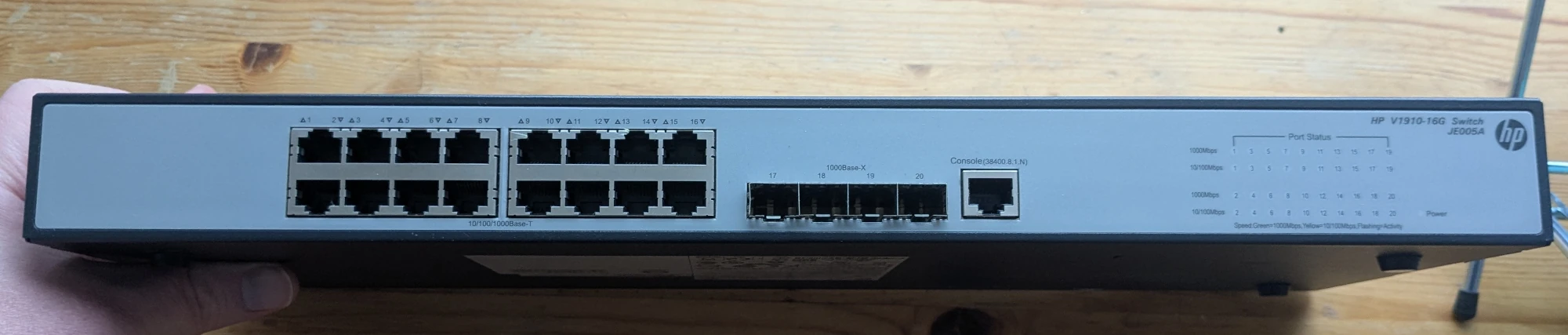
It started after getting a HP v1910 switch. The possibilities it presented made networking rewarding. VLANs, routing and more demanding services quickly showed the limitations of OpenWrt. Instability and lackluster performance of low-mid tier WiFi routers seriously hampered my goals.
To remedy this I bought an mITX motherboard with an integrated Atom CPU, cheap case and installed pfSense on it. The difference was night and day. My network was immediately stable and faster. I got a good price on a HP N54l. Put four 3TB WD Red disks, 16GB RAM in it and installed FreeNAS. Data security at last. That later got upgraded to TrueNAS Core.
This continued for years. I was happy with the setup. When the motherboard died later on I migrated to a Pondesk with E3845 CPU & four I225-V RJ-45. OPNsense had been around for a little while at the time. The project is steadfast in its open-source stance and showed promise in design. So I tried it out and never looked back.
When the Pondesk firewall finally died I went looking for a better solution. Stumbled over videos showing people using M720q & M920x as firewalls with SFP+ cards to enable 10Gb networking. Since I had planned to migrate to 10Gb at some point, this seemed like a good time to do so. I started planning.
Current Setup
I bought a M920x, i7-8700T CPU, 32GB RAM, 2x Samsung 980 500GB NVMe, AOC-STGN-i2S dual SFP+ NIC, and a small 256GB NVME to put in the WiFi slot for boot. Installed Proxmox VE and configured the two 500GB SSDs as ZFS mirror. Installed OPNsense as a VM and passed through the NIC. Later upgraded the SFP+ NIC to an AOC-STGF-i2S. It is based on the newer X710 chipset and since it's PCIe 3.0, could use both ports at full duplex speed without any problems.
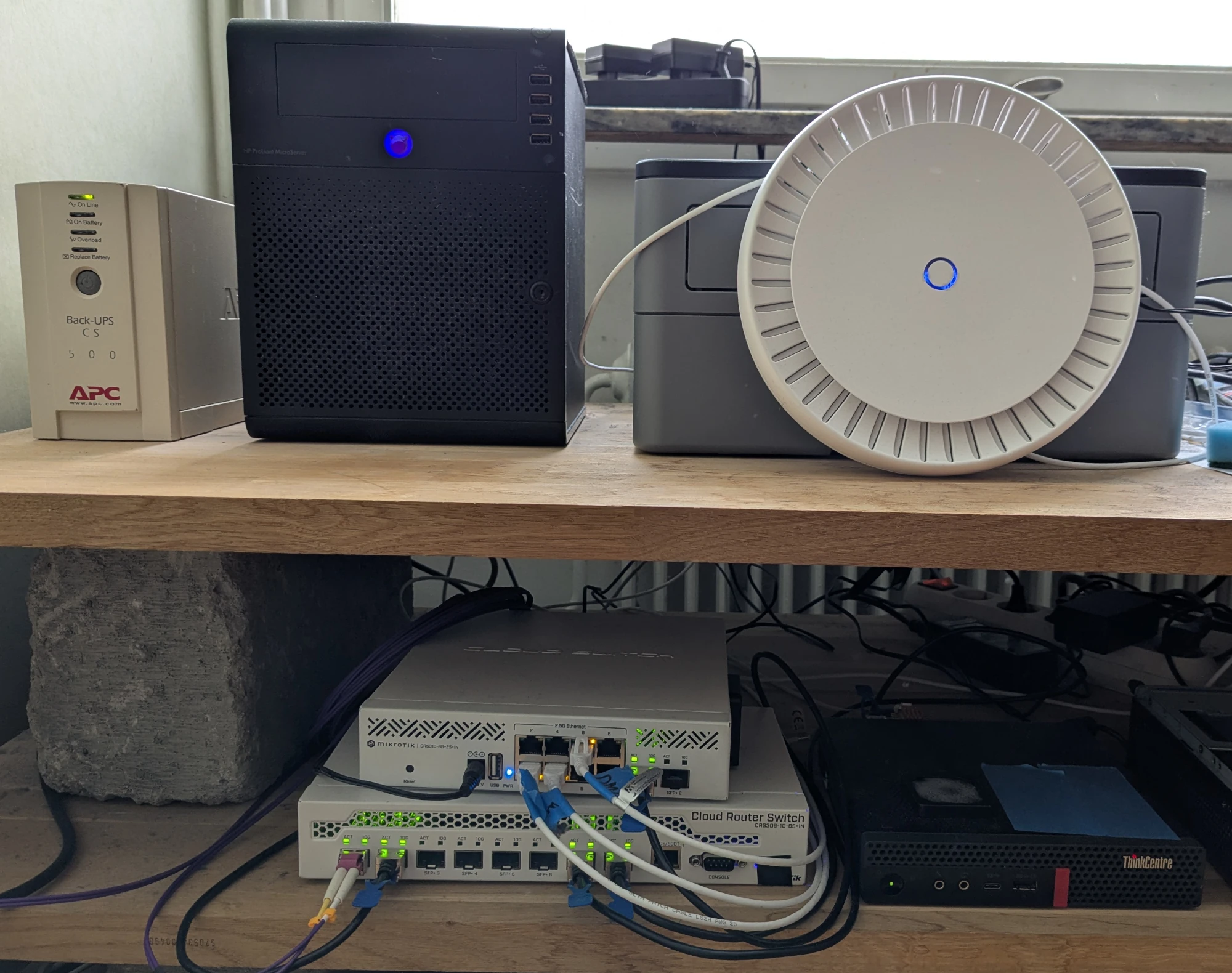
Bought a MikroTik CRS310-8G+2S+IN with eight 2.5Gb and two SFP+ ports. Soon after that I got a MikroTik cAP ax AP & CRS309-1G-8S+ with 8 SFP+.
PBS
N54L got reinstalled with Proxmox Backup Server (PBS). It does everything TrueNAS did for me earlier. But is less limited when it comes to modifying the underlying Debian system. It also does backups well for my Proxmox VE host and Linux in general with the Proxmox backup client. Forgejo and Syncthing ran in podman containers too. The old AOC-STGN-i2S was a good fit for it since it too is PCIe 2.0.
Workstation
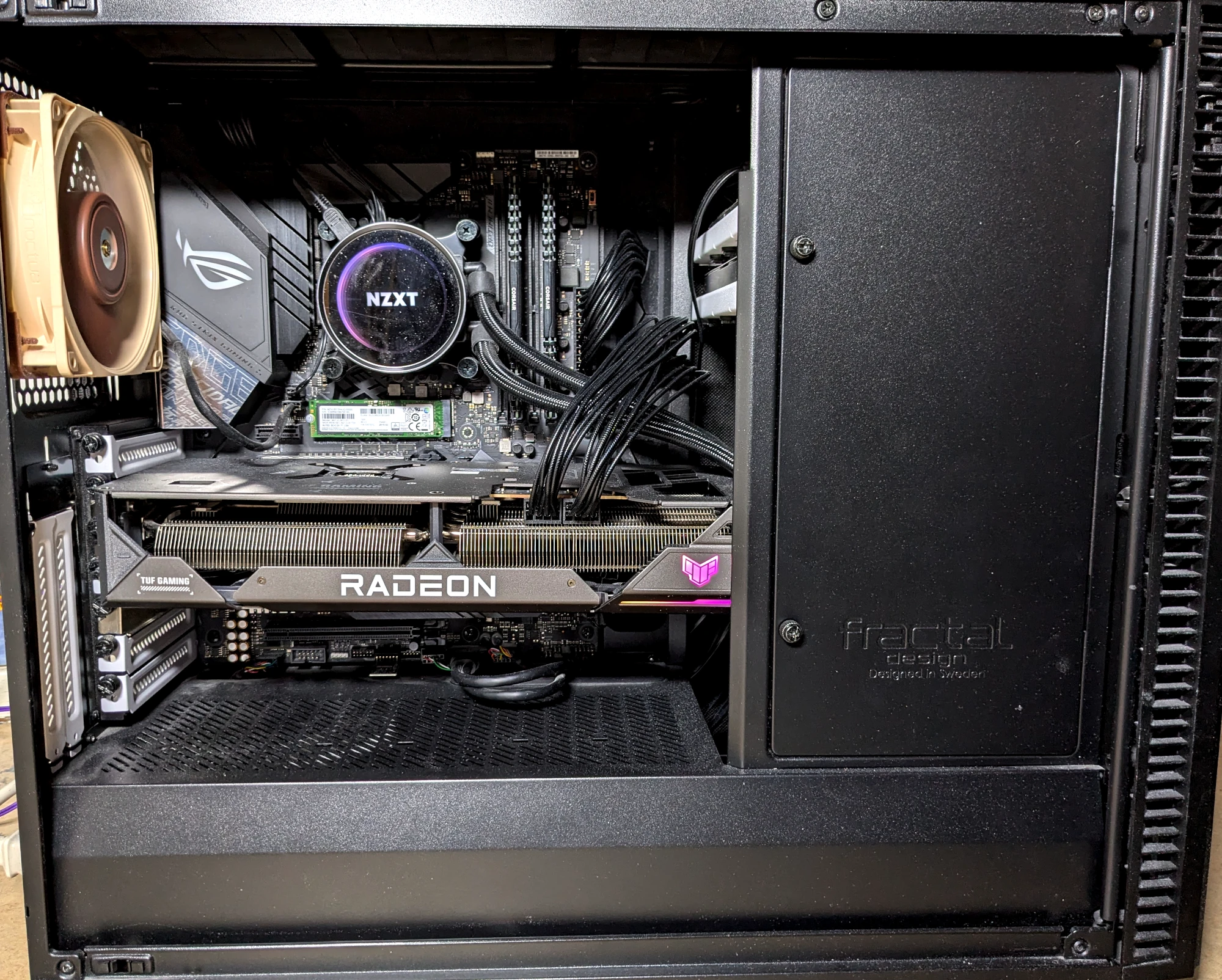
The primary workstation is an Asus Z390-F Gaming MB with I7-9700K CPU, 64GB RAM and a Radeon RX 7700 XT in a Fractal Design R4. I was dual booting between Windows 11 Pro and Fedora. But found myself using Windows less and less until I had not booted into it for months. Installed Arch Linux over Windows on the primary NVMe and used the second NVMe for snapshots and general storage instead of Fedora. Had used Arch about 10 years ago. Really liked it, but setting it up again just like I wanted felt like a daunting task before I had proper backup and a way to store configurations privately in Git. PBS & Forgejo changed that. All those hours of setting everything just right could be backed up on self hosted hardware now.